STANDART ZAMAN – GÖZLEM SAYISI
Bir orman endüstrisi işletmesinde herhangi bir iş devresine ait zaman ölçümleri aşağıdaki gibidir (Hata payını % 5, güven düzeyini % 95, paylar toplamı %15’dir).
a) Bu iş için gerekli standart zamanı hesaplayınız.
b) Yapılan gözlem sayısının yeterli olup olmadığını hesaplayarak gösteriniz.
c) Yapılmış olan tempo taktirleri hakkındaki görüşleriniz nelerdir?


Çözüm
a) Normal zaman : NZ=GZxD
Standart zaman : SZ = (1+P)xNZ

Standart zaman: SZ = 824.6 x (1 + 0.15) = 948.3 saniye
b) Gözlem sayısı


c) Ölçülen zaman arttıkça tempo azalmalıdır. Tabloda verilen tempo değerleri bu kurala çoğunlukla uymamaktadır.
Çalışma sorusu
- Bir orman endüstrisi işletmesinde iş etüdü uzmanı 09.00- 17.00 saatleri arasında 10 dakika süreli 10 gözlem yapmıştır. İş devresine ait zaman ölçümleri kronometre ile ve sürekli olarak yapılmıştır. Tabloda derece ve ölçülen zamanlar verilmiştir. Hata payı % 5, güven düzeyini % 95, paylar % 20’dir.
a) Bu gözlemlerin hangi tesadüfi zamanlarda yapılması gerektiğini rasgele sayılar çizelgesini kullanarak belirleyiniz (Rasgele sayılar çizelgesi kullanılarak ilk tesadüfi sayı olarak 8. satır ve 10. sütundaki sayıdır. Atlama sayısı 1’dir).
b) Bu iş için gerekli standart zamanı hesaplayınız.
c) Yapılan gözlem sayısının yeterli olup olmadığını hesaplayarak gösteriniz.

NORM KADRO
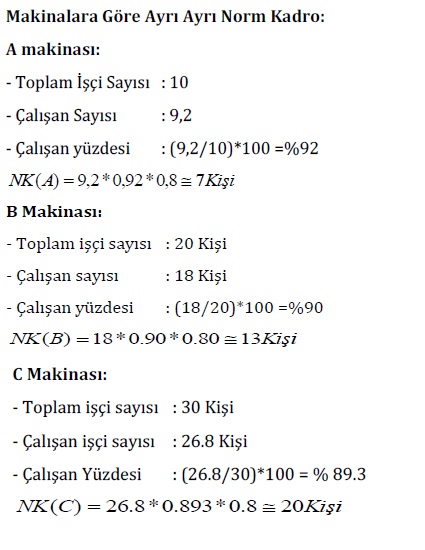
- Bir üretim ünitesinde bulunan A, B ve C makinalarında yapılan 5 gözlem sonucu ilgili makinalarda görevli işçilerin sayısı aşağıdaki tablolarda verilmiştir. 5 gözlem sonunda 200 birim ürün üretilmiştir. Güven düzeyi % 95, hata payı % 5, ortalama tempo % 80’dir.
a) Üretim ünitesi için norm kadroyu belirleyiniz.
b) Boş işçi oranını dikkate alarak yapılacak gözlem sayısını belirleyiniz.
c) Diğer oranları da belirleyerek üretim ünitesi hakkında yorumunuzu yapınız.
 Norm kadro ve gözlem
sayısını hesaplayınız ve
değerlendiriniz.
Norm kadro ve gözlem
sayısını hesaplayınız ve
değerlendiriniz.



Bir orman endüstrisi işletmesinde herhangi bir iş devresine ait zaman ölçümleri aşağıdaki gibidir (Hata payını % 5, güven düzeyini % 95, paylar toplamı %15’dir).
a) Bu iş için gerekli standart zamanı hesaplayınız.
b) Yapılan gözlem sayısının yeterli olup olmadığını hesaplayarak gösteriniz.
c) Yapılmış olan tempo taktirleri hakkındaki görüşleriniz nelerdir?


Çözüm
a) Normal zaman : NZ=GZxD
Standart zaman : SZ = (1+P)xNZ

Standart zaman: SZ = 824.6 x (1 + 0.15) = 948.3 saniye
b) Gözlem sayısı


c) Ölçülen zaman arttıkça tempo azalmalıdır. Tabloda verilen tempo değerleri bu kurala çoğunlukla uymamaktadır.
Çalışma sorusu
- Bir orman endüstrisi işletmesinde iş etüdü uzmanı 09.00- 17.00 saatleri arasında 10 dakika süreli 10 gözlem yapmıştır. İş devresine ait zaman ölçümleri kronometre ile ve sürekli olarak yapılmıştır. Tabloda derece ve ölçülen zamanlar verilmiştir. Hata payı % 5, güven düzeyini % 95, paylar % 20’dir.
a) Bu gözlemlerin hangi tesadüfi zamanlarda yapılması gerektiğini rasgele sayılar çizelgesini kullanarak belirleyiniz (Rasgele sayılar çizelgesi kullanılarak ilk tesadüfi sayı olarak 8. satır ve 10. sütundaki sayıdır. Atlama sayısı 1’dir).
b) Bu iş için gerekli standart zamanı hesaplayınız.
c) Yapılan gözlem sayısının yeterli olup olmadığını hesaplayarak gösteriniz.

NORM KADRO
- Bir üretim ünitesinde bulunan A, B ve C makinalarında yapılan 5 gözlem sonucu ilgili makinalarda görevli işçilerin sayısı aşağıdaki tablolarda verilmiştir. 5 gözlem sonunda 200 birim ürün üretilmiştir. Güven düzeyi % 95, hata payı % 5, ortalama tempo % 80’dir.
a) Üretim ünitesi için norm kadroyu belirleyiniz.
b) Boş işçi oranını dikkate alarak yapılacak gözlem sayısını belirleyiniz.
c) Diğer oranları da belirleyerek üretim ünitesi hakkında yorumunuzu yapınız.
 Norm kadro ve gözlem
sayısını hesaplayınız ve
değerlendiriniz.
Norm kadro ve gözlem
sayısını hesaplayınız ve
değerlendiriniz.
Çözüm

Norm Kadro:
NK norm kadro; ÇS çalışan sayısı, Y çalışan yüzdesi ve D tempo olmak üzere norm kadro
NK = ÇS *ÇY *D
eşitliği ile ifade edilir.
Genel toplama göre norm kadro:
- Toplam işçi sayısı : 60
- Çalışan işçi sayısı : 54
- Boş işçi sayısı : 6
- Çalışan yüzdesi: (54/100)*100 = % 90
Norma Kadro = Çalışan Sayısı x Çalışan Yüzdesi x Tempo
NK
NORMKADRO ÇS* ÇY* D
NK=54*0,90*0,8
NK=39 kişi yaklaşık olarak


Comments
Post a Comment